Childhood obesity is more than a concern about weight or appearance. Persistent excess weight can affect a child’s physical and emotional well-being and increase the risk of health problems later in life.
According to the World Health Organization (WHO), more than 390 million children and adolescents aged 5–19 were living with overweight in 2022, including over 160 million with obesity. Childhood and adolescent obesity also increased from 2% in 1990 to 8% in 2022.
Childhood obesity is associated with conditions such as type 2 diabetes, cardiovascular disease, fatty liver disease, sleep problems, and joint complications, and may increase the likelihood of obesity continuing into adulthood.
Early assessment and appropriate support can help promote healthier growth. A Free BMI Calculator can provide an initial reference, but interpret children’s BMI by age and sex rather than adult BMI categories.
This article explores the long-term health risks of untreated childhood obesity, the importance of early intervention, and ways families can support healthier growth.
What Is Childhood Obesity and Why Does It Matter?
Childhood obesity refers to excess body fat that may affect a child’s health and development. For children aged 5–19, healthcare professionals use BMI-for-age, which accounts for age and sex rather than adult BMI categories.
A Free BMI Calculator can provide a basic reference but should not be used for diagnosis. Also consider growth patterns, nutrition, physical activity, sleep, family history, and overall health.
Childhood obesity can increase the risk of type 2 diabetes, cardiovascular disease, fatty liver disease, and other health concerns. Genetics, lifestyle, sleep, medications, and family environment can also influence obesity.
Early intervention should focus on healthy growth, balanced nutrition, physical activity, metabolic health, and long-term well-being through age-appropriate medical guidance.
What Are the Long-Term Effects of Childhood Obesity?
Childhood is an important stage of physical and metabolic development. When obesity persists, excess body fat can affect multiple body systems and increase the risk of health problems during childhood and later in life.
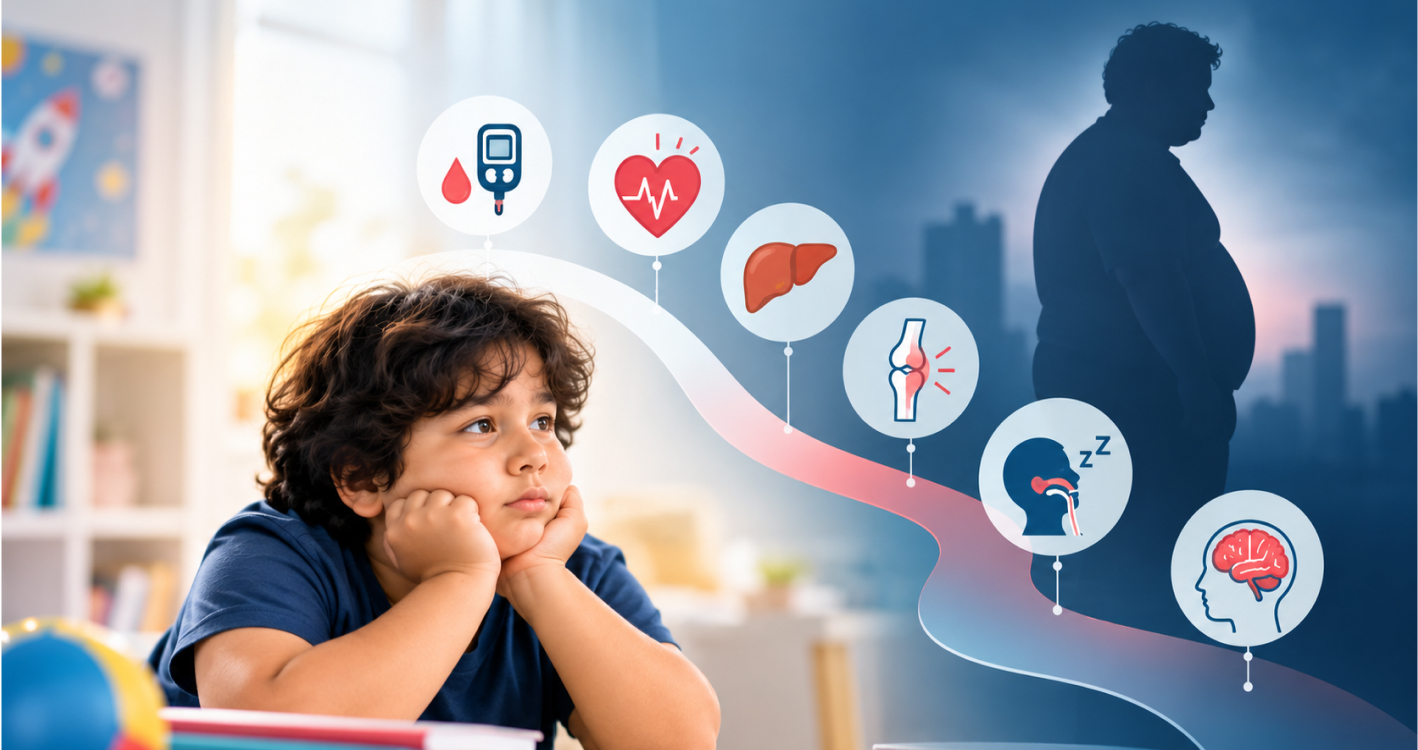
Childhood obesity may be associated with insulin resistance, high blood pressure, abnormal cholesterol, fatty liver disease, sleep apnea, joint problems, and hormonal changes. It can also increase the likelihood of obesity continuing into adulthood, along with a higher risk of conditions such as type 2 diabetes and cardiovascular disease.
However, not every child with obesity will develop these complications. Risk varies based on factors such as age, obesity severity and duration, genetics, family history, lifestyle, and metabolic health.
Early identification allows families and healthcare professionals to address potential health concerns and support healthy growth, balanced nutrition, physical activity, adequate sleep, and overall well-being.
Long-Term Risk of Untreated Childhood Obesity
Childhood obesity can affect multiple aspects of health, with some complications developing gradually. The longer obesity persists, the greater the potential risk of related conditions. The American Academy of Pediatrics recommends evaluating children and adolescents with obesity for concerns such as abnormal blood sugar, cholesterol, fatty liver disease, and high blood pressure.
Potential long-term health risks include:
- Type 2 Diabetes: Excess body fat can contribute to insulin resistance and abnormal blood sugar levels.
- Heart Health: Obesity is associated with high blood pressure, abnormal cholesterol, and other cardiometabolic risks.
- Fatty Liver Disease: Excess liver fat may lead to metabolic dysfunction-associated steatotic liver disease (MASLD) and, in some cases, liver inflammation or damage.
- Sleep Apnea: Obesity can increase the risk of obstructive sleep apnea, affecting sleep, concentration, and daytime energy.
- Bone and Joint Problems: Extra weight can place greater stress on developing bones and joints.
- Hormonal Changes: Obesity may contribute to hormonal changes and conditions such as PCOS in adolescent girls.
- Emotional Well-Being: Weight stigma and bullying may affect self-esteem, confidence, and mental well-being.
Not every child with obesity will develop these complications. Risk varies according to age, severity and duration of obesity, genetics, family history, lifestyle, and overall health.
Early assessment can help identify potential concerns and support healthier growth. A Free BMI Calculator can provide an initial reference, but a healthcare professional should interpret children’s BMI by age and sex.
Can Childhood Obesity Carry On Into Adulthood?
Childhood is a key stage of physical and metabolic development. Persistent obesity can increase the risk of insulin resistance, high blood pressure, abnormal cholesterol, fatty liver disease, sleep apnea, joint problems, and hormonal changes, as well as emotional challenges from weight stigma or bullying.
It can also increase the likelihood of obesity and related conditions, such as type 2 diabetes and cardiovascular disease, continuing into adulthood. However, individual risk varies based on genetics, family history, lifestyle, and overall health.
Early assessment can identify potential concerns and support healthy growth through nutrition, physical activity, sleep, and lifestyle changes. A Free BMI Calculator can provide an initial reference, but professional evaluation is important.
What Impact Does Untreated Childhood Obesity Have On Quality Of Life?
Childhood obesity affects not only a child’s physical health but also how they sleep, move, participate in activities, interact with others, and feel about themselves. These effects vary from child to child and may become more apparent if obesity continues over time.
Physical Activity and Daily Life
Extra weight can make physical activity more difficult, causing lower stamina, breathlessness, or joint discomfort and reducing participation in sports and outdoor activities.
Sleep and Energy Levels
Obesity can increase the risk of sleep apnea and poor sleep, which may contribute to daytime tiredness, difficulty concentrating, and reduced activity.
Emotional and Social Health
Children with obesity may experience bullying, weight stigma, or social exclusion, which can affect self-esteem, confidence, body image, and emotional well-being.
School and Social Participation
Physical limitations or body-image concerns may affect participation in school and social activities. A supportive, non-judgmental approach can help children develop healthier attitudes toward food, activity, and body image.
Managing childhood obesity should focus on more than weight, considering physical and mental health, sleep, nutrition, activity, and overall quality of life. Early specialist support can identify concerns and promote healthy growth and long-term well-being.
Why Early Intervention Matters
Childhood obesity can develop gradually, making early signs easy to overlook. Early intervention helps identify a child’s growth pattern, detect potential health concerns, and build healthier habits before complications develop.
The goal is not always weight loss. For many children, the focus is on healthy growth, balanced nutrition, physical activity, adequate sleep, and metabolic health, with the approach tailored to their age and individual needs.
For adolescents with severe obesity and related health complications, specialists may consider additional treatment options. Weight Loss Surgery is not a routine treatment for children and, when considered for adolescents, requires careful assessment by an experienced multidisciplinary team.
Early support gives families a better opportunity to promote healthy growth and long-term well-being.
How Can Parents Help With Healthy Weight Management In Children?
Parents and caregivers can play an important role in creating a home environment that promotes healthy growth by focusing on healthy habits rather than blaming, punishing, or focusing on appearance.
Some practical approaches include:
- Offer balanced meals: Include vegetables, fruits, whole grains, protein-rich foods, and healthy fats.
- Encourage physical activity: Make movement fun through outdoor play, walking, cycling, or sports.
- Limit processed foods and sugary drinks: Offer them less often and keep healthier options available.
- Prioritize sleep: Maintain regular, age-appropriate sleep routines.
- Reduce sedentary time: Encourage breaks from prolonged screen use and sitting.
- Build healthy family habits: Children are more likely to adopt healthy routines when the whole family participates.
- Focus on health, not weight: Avoid negative comments about appearance and weight.
- Monitor growth: A Free BMI Calculator can provide an initial estimate, but a child’s BMI should be interpreted by a healthcare professional based on age and sex.
Most importantly, changes should be gradual and sustainable, and children must not be put on severe weight-loss diets without first receiving appropriate medical and nutritional advice.
At What Stage Should Parents Consider Getting Professional Advice?
Parents should seek professional guidance if a child has rapid weight gain, difficulty maintaining a healthy growth pattern, low activity levels, breathing or sleep problems, joint discomfort, or concerns about blood sugar or blood pressure.
A bariatric surgeon can assess BMI-for-age, growth, nutrition, activity, sleep, family history, and overall health to determine whether further evaluation is needed.
For adolescents with severe obesity and related complications, a multidisciplinary team may consider treatments such as medication or weight-loss surgery in selected cases.
A Free BMI Calculator can provide general awareness but cannot determine whether a child needs treatment. Early professional guidance helps families choose an appropriate approach for the child’s long-term health.
Conclusion
Childhood obesity can affect a child’s physical health, emotional well-being, and long-term risk of chronic conditions. Early recognition and healthy changes in nutrition, physical activity, sleep, and daily habits can support healthier growth.
A Free BMI Calculator can provide an initial reference, but a medical professional should assess children’s BMI by age and sex. For adolescents with severe obesity and related complications, specialist-led care may include medical treatment and, in selected cases, weight loss surgery. Families considering Obesity surgery in Ahmedabad can consult qualified specialists at NObesity to understand their treatment options.
FAQs
What Are The Long-Term Health Risks Of Untreated Childhood Obesity?
Untreated childhood obesity can increase the risk of type 2 diabetes, hypertension, cardiovascular disease, fatty liver disease, sleep apnoea, joint problems and hormonal changes. It can also increase the chances of obesity continuing into adulthood.
Can Childhood Obesity Lead To Health Problems In Adulthood?
Yes, childhood obesity can be a risk factor for obesity and related conditions (type 2 diabetes, cardiovascular disease, etc.) later in life. Individual risk will, of course, vary depending on your genetics, family history, lifestyle, and overall health.
How Can Parents Spot Obesity In Children?
Parents can track their child's growth and get a healthcare professional to assess it. For children, you interpret BMI by age and sex rather than using the adult BMI categories. A free BMI calculator can give you a rough guide, but it can't diagnose obesity.
How Can Parents Help Manage Childhood Obesity?
Parents can promote balanced eating, regular exercise, sufficient sleep, reduced sedentary time, and healthy family routines. The emphasis should be on sustainable habits and overall well-being rather than appearance or rapid weight loss.
When Should Parents Seek Medical Advice For Childhood Obesity?
Parents should see a doctor if their child is gaining weight rapidly, has breathing or sleep problems, has joint pain, or is worried about blood sugar or blood pressure. Early assessment is key to identifying potential problems and determining what care is needed.
About the Author