
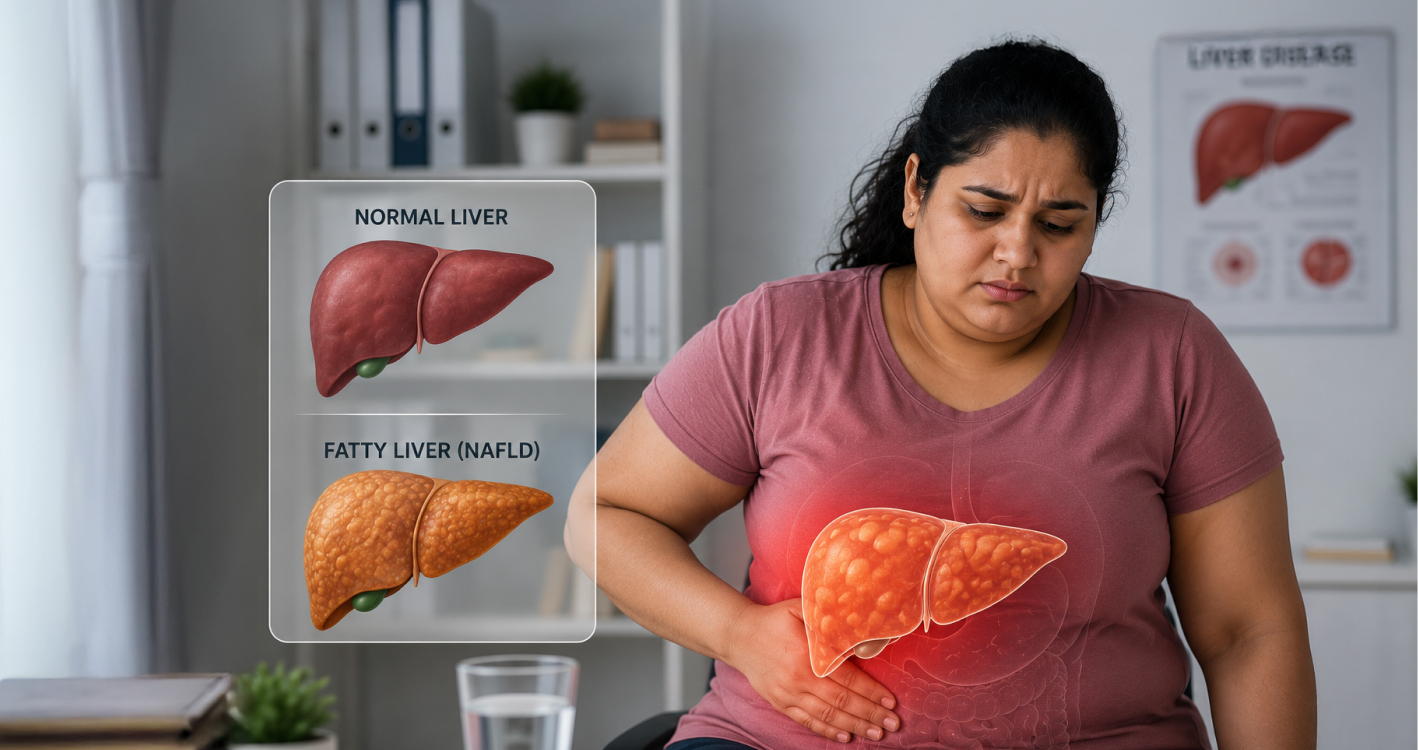
When Does Fat in the Liver Become a Health Concern?
Fatty liver occurs when excess fat builds up in the liver. In many people, it may not cause noticeable symptoms at first. But when that fat accumulation continues, in some people, ongoing liver fat accumulation can be associated with inflammation and liver injury, which may progress to fibrosis and, in advanced cases, cirrhosis.
What can happen if it progresses?
- Fat accumulation: Excess fat builds up in the liver.
- Inflammation: In some people, liver fat is associated with inflammation and liver-cell injury, known as MASH.
- Fibrosis: Persistent liver injury can cause scar tissue to develop.
- Cirrhosis: Advanced fibrosis can progress to cirrhosis and increase the risk of serious liver complications.
In severe or untreated cases, extensive scarring can progress to cirrhosis and other serious complications.
What If Treating Obesity Could Help Your Liver Too?
If you are living with obesity and fatty liver, meaningful weight loss can play an important role in improving your metabolic and liver health. Current hepatology guidance supports substantial weight loss as a cornerstone of MASLD management, and bariatric surgery in appropriately selected patients with obesity can produce significant weight loss and improvement in liver disease.
As excess weight comes down, the benefits can extend to your liver too:
- Significant weight loss can help decrease the amount of excess fat stored in the liver.
- Better insulin sensitivity can help the body manage glucose and fat more effectively.
- As liver fat decreases and metabolic health improves, the liver may function in a healthier environment.
- Bariatric surgery, combined with ongoing nutrition and lifestyle support, can help with weight loss over the long term.
FAQs
Can obesity cause fatty liver?
Obesity is an important risk factor for metabolic dysfunction-associated steatotic liver disease (MASLD), particularly when it occurs alongside insulin resistance, Type 2 diabetes, and other metabolic risk factors. However, fatty liver can have multiple causes. A medical evaluation helps determine why liver fat is present and whether there are signs of liver injury or fibrosis.
Can losing weight improve fatty liver?
Weight loss can reduce liver fat and improve several metabolic risk factors. The amount of weight loss and the appropriate approach can vary from person to person. Lifestyle-based weight management is an important part of managing metabolic liver disease, while some patients may require additional medical or surgical treatment for obesity.
Does NObesity treat fatty liver?
NObesity primarily focuses on managing obesity and metabolic health. For patients with obesity and fatty liver, improving weight and metabolic health may form an important aspect of a broader care plan. However, fatty liver itself may require separate evaluation and management by a gastroenterologist, hepatologist, or other qualified healthcare professional.
Can bariatric surgery help people with obesity and fatty liver?
For appropriately selected patients with obesity, bariatric surgery can result in substantial weight loss and improvements in several obesity-related metabolic conditions. Evidence also supports benefits for liver-related outcomes in selected patients with metabolic liver disease. However, bariatric surgery is not automatically appropriate for every person with obesity and fatty liver. Surgical suitability should be determined through a comprehensive medical assessment.
Should I see a liver specialist if I have fatty liver?
If your doctor identifies fatty liver, discuss the finding with them. Depending on your medical history, liver tests, metabolic risk factors, and risk of liver fibrosis, you may require additional evaluation or referral to a gastroenterologist or hepatologist. Non-invasive tests may also assess the risk of liver fibrosis.
Is fatty liver the same as cirrhosis?
No. Fatty liver and cirrhosis are not the same condition. Fat accumulation in the liver can occur without advanced liver damage. In some patients, however, progressive inflammation and fibrosis can lead to advanced liver disease and eventually cirrhosis. Risk varies between individuals, which is why appropriate assessment and follow-up matter.
What is MASLD?
MASLD stands for Metabolic Dysfunction-Associated Steatotic Liver Disease. It is the current term used for what was previously called non-alcoholic fatty liver disease (NAFLD). MASLD describes liver fat accumulation in people with relevant cardiometabolic risk factors, after considering other causes of liver disease.
Can I have fatty liver even if I am not obese?
Yes. Fatty liver can occur in people who do not have obesity. Metabolic risk factors, genetics, alcohol use, medications, and other medical conditions may influence the development of liver fat. That is why doctors should evaluate fatty liver on a case-by-case basis rather than automatically crediting it to body weight.
Can optimizing metabolic health help reduce my overall health risks?
Boosting metabolic health can help address several risk factors associated with obesity, including abnormal blood sugar, blood pressure, cholesterol, and excess body weight. Because obesity and metabolic dysfunction can affect multiple organs, including the liver, an all-encompassing approach can be more meaningful than focusing on weight alone.