
People today are rapidly moving towards healthier lifestyles, creating a more health-conscious environment for future generations; this growing awareness often directs us to focus on weight loss as a primary goal. However, for those struggling with obesity, medical interventions like bariatric surgery have become a key consideration alongside traditional methods.
While losing weight is often seen as a sign of progress, it does not always equate to better health. Weight loss includes a reduction in muscle and water, and not just fat; this makes it essential to understand the difference between fat loss and overall weight reduction. This is where understanding the difference between fat loss and overall weight reduction becomes vital.
This blog explores the differences between fat loss and weight loss and explains when medical interventions, such as bariatric surgery, may be necessary for long-term results.
Please read on to understand why the distinction between fat loss and weight loss matters and which approaches lead to long-term results.
What Is Weight Loss?
Weight loss reduces the total body weight. It includes fat, water, muscle, and bone density. Your weight might reduce on the weighing machine, but it does not always indicate improved health.
When you depend on the weighing scale to calculate fat loss, you are often disappointed because the scale’s weight fluctuates due to water retention, salt intake, or digestive capacity.
Components of Weight Loss
There are many diet plans available. However, you should choose one after proper medical intervention for your body’s needs. There are several components to consider when choosing a diet for weight loss.
For your best chance to have appropriate weight loss, look for the diet plan that includes the following components –
- Reasonable weight loss expectations
- A diet that fits your preference
- Keeping your favorite food in your diet plan
- Focus on changing eating and activity patterns at regular intervals.
- Tracking your weight and diet regularly
- Accountability and support for a long-term result
There is no one-size-fits-all diet plan. You can find the one that best fits your lifestyle and encourages you to keep going even after small slips.
Common Methods People Use For Weight Loss
People generally look for a quick fix when it comes to losing weight. But they often forget that the fastest way to lose weight is not always the most sustainable; it requires a combination of a healthy diet, regular exercise, and medical intervention, such as weight-loss surgery, if the person is obese.
Here are some methods generally used for weight loss –
Exercises
Regular physical activity plays a crucial role in effective weight loss by burning calories. Incorporating different forms of exercise can help you focus on various aspects of your health, making the process more balanced and engaging. The following are some common types of exercises that support weight loss –
- Cardio Exercise: Activities such as running, cycling, swimming, and brisk walking are all excellent for burning calories.
- Strength Training: Helps you build lean muscle, which increases your resting metabolic rate.
- High Intensity Interval Training (HIIT): A time-efficient exercise method that combines short bursts of intense activity followed by brief recovery periods.
Diet Plans For Weight Loss
Choosing the right diet plan is essential for achieving healthy and sustainable weight loss, as different approaches work better for different individuals.
Below are various types of diet plans that can help meet specific health goals and lifestyle preferences.
- Focus on Whole Foods: You can choose to eat whole, unprocessed foods, which are the foundation of any weight-loss diet and help reduce the urge to overeat.
- Incorporate Healthy Fats: While fats are high in calories, healthy fats, such as those found in avocados, olive oil, and nuts, can help you feel fuller for longer.
- Reduced Processed Foods and Sugary Drinks: They are high in empty calories and generally provide little nutritional value.
What is Fat Loss?
Understanding fat loss goes beyond simply looking at the number on the scale; it involves recognizing how the body stores and uses energy. To fully grasp its importance, it is essential to explore how body composition influences overall health, why focusing on fat loss leads to more sustainable outcomes, and how metabolism regulates the body’s calorie-burning efficiency.
Understanding Body Composition
Body composition is your body’s amount of fat relative to fat-free mass. Individuals with optimal body composition are typically healthier, move more easily and efficiently, and generally feel better.
Why Fat Loss Is Healthier Than General Weight Loss
Fat loss targets excess body fat while preserving lean muscle mass, leading to better health outcomes. General weight loss includes the loss of water and muscle; fat loss improves body composition and supports a more efficient metabolism. It also helps in regulating blood sugar levels and reduces the risk of diabetes and heart disease.
Role Of Metabolism and Lifestyle
Metabolism is the process by which the body converts food into energy, determining how efficiently it converts food into energy and burns calories; it also influences how easily fat is stored or lost. A higher metabolic rate helps you burn more calories, while a slower metabolic rate can make fat loss more challenging.
Fat Loss vs. Weight Loss: Key Differences
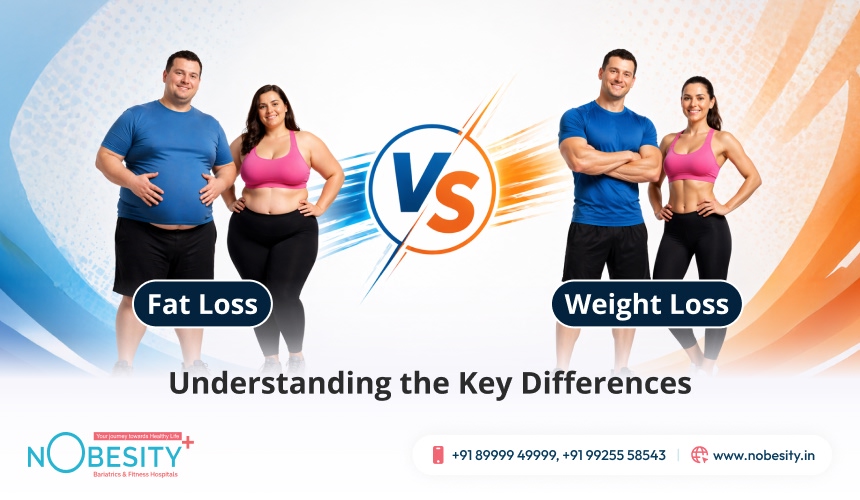
As mentioned above, weight loss reduces your body’s overall weight, which comes from fat, muscle, water, and even glycogen stores. Fat loss specifically means reducing body fat while ideally preserving muscle mass. In simple language, all fat loss leads to weight loss, but not all weight loss is fat loss. So, you may lose weight without actually becoming leaner if you lose muscle instead of fat.
Here is a table explaining a clear difference between fat loss and weight loss –
| Fat Loss | Weight Loss |
| Reduces overall body weight, including muscle, fat and water. | Targets fat loss while maintaining lean muscle. |
| Often focuses on reducing the lower body. | Lowers the body fat percentage but maintains muscle mass. |
| May result in a skinny physique due to loss of muscle and fat. | Toned body due to higher muscle-to-mass ratio. |
| Weight may reduce but it does not always mean fat loss. | Weight may reduce slowly, but fat loss will be consistent. |
| The body may look smaller due to loss of muscle mass. | The body may look leaner and more defined. |
| Often short-term, if achieved through a crash diet. | More sustainable with a healthy diet and lifestyle changes. |
Short-Term Vs. Long-Term Outcomes
Weight loss shows results quickly, while fat loss is slower, more consistent, and steady, and may not immediately reflect big changes, but it improves metabolism and composition.
In the long run, weight loss without focus on fat can lead to muscle loss, slower metabolism, and easier weight regain, whereas sustained fat loss supports better strength and metabolic health.
Why Traditional Weight Loss Methods Often Fail
Many individuals begin their weight loss journey with traditional methods such as dieting and exercise, expecting consistent and lasting results. However, despite all these efforts, they do not always lead to long-term weight loss. Understanding the limitations of these methods helps explain why you may not always succeed with it.
Impact Of Crash Dieting And Muscle Loss
Crash dieting negatively affects your body, leading to muscle loss as well as fat. Reduced calorie intake lacks sufficient energy and begins to break down muscle tissue, as it cannot rely on fat stores; it weakens physical strength and slows metabolism. So even if your weight drops quickly, your body becomes less efficient at maintaining that loss, increasing the chance of regaining weight.
Yo-Yo Dieting and Metabolic Slowdown
Yo-yo dieting is a diet that helps you lose weight faster, but then you may regain it quickly. It can significantly disrupt your body’s metabolism in the long run. The extreme calorie restriction in this diet will make you overeat, leading to a metabolic slowdown where fewer calories are burned at rest; this makes it difficult to lose weight and results in fat accumulation.
Limitations Of Exercise-Only Approaches
For people with obesity, relying solely on exercise for weight loss has limitations, as it alone cannot fully offset their dietary habits. While exercise helps burn calories and improves overall health, the number of calories burned during a workout is often much lower than the calories easily consumed through food, making it difficult to create a consistent calorie deficit.
Health Risks of Excess Body Fat
Excess body fat is linked to a range of serious health conditions that can impact overall quality of life. High levels of body fat, particularly around the abdomen, increase the risk of obesity-related conditions such as type 2 diabetes, heart disease, high blood pressure, sleep apnea, and joint problems. Over time, these conditions can strain vital organs, reduce mobility, and lead to long-term complications if not managed effectively.
When is Medical Intervention Necessary?
Medical intervention, such as weight loss surgery for weight management, becomes necessary when excess weight poses serious health risks and does not improve despite consistent lifestyle efforts.
This procedure is typically recommended for those who have struggled to achieve sustainable weight loss through diet and exercise alone and are experiencing obesity-related health complications.
Bariatric Surgery: A Proven Solution for Sustainable Fat Loss
Bariatric surgery, also known as weight loss surgery, is an obesity treatment. Your bariatric surgeon may recommend it if other weight loss methods have not worked for you. It affects your digestive system and reduces your body’s calorie intake.
Types Of Bariatric Procedures
Bariatric surgery includes several procedures designed to support significant weight loss. Some of the most common types include:
- Gastric bypass
- Sleeve gastrectomy
- Adjustable gastric banding
- And biliopancreatic diversion with duodenal switch.
Each of these procedures works in different ways. It either reduces stomach size, limits food intake, alters digestion, or a combination of these factors.
Bariatric procedures are designed to promote fat loss rather than just overall weight loss by creating long-term changes in how the body regulates hunger and metabolism. Unlike crash dieting, these surgeries help preserve more muscle mass while encouraging the body to use stored fat as a primary energy source.
Benefits Of Bariatric Surgery
Bariatric surgery provides multiple health and lifestyle benefits that extend beyond weight loss. The following points highlight how this procedure can positively impact your physical health and overall quality of life :
- Significant and sustained weight loss
- Greater reduction in body fat while preserving muscle mass
- Enhanced metabolism and better hormonal balance
- Reduced risk of heart disease and other chronic illnesses
- Improved mobility, physical function, and energy levels
- Better appetite control and reduced hunger
- Long-term weight management compared to traditional methods
Overall, these benefits demonstrate how bariatric surgery can help you lead an improvement in health and daily life.
Combining Bariatric Surgery With Lifestyle Changes
Bariatric surgery is a powerful tool for weight and fat loss, but its long-term success depends heavily on adopting healthy lifestyle changes. Following surgery, maintaining a balanced, nutrient-rich diet is essential to support healing, preserve muscle mass, and promote sustained fat loss. At the same time, regular physical activity helps improve metabolism, strength, and overall well-being.
Conclusion
Understanding the difference between weight loss and fat loss is essential for achieving healthier results. While traditional methods may offer quick changes on the scale, they often fail to deliver long-term success, especially when muscle loss and metabolic slowdown come into play. Focusing on fat loss rather than just overall weight is more beneficial. For individuals struggling with severe obesity related conditions, seeking professional medical advice at NObesity for bariatric surgery is crucial to explore effective options.
FAQs
Why Is Fat Loss Considered Better Than General Weight Loss?
Fat loss is more beneficial because it improves body composition, supports metabolism, and helps maintain muscle strength. In contrast, general weight loss may lead to muscle loss and slower metabolism, increasing the chances of weight regain.
How Can I Ensure I Am Losing Fat And Not Just Weight?
To focus on fat loss, it is important to combine a balanced, protein-rich diet with regular strength training and physical activity, while avoiding extreme calorie restrictions, which can lead to muscle loss instead of fat reduction.
How Does Bariatric Surgery Support Weight Loss And Fat Loss?
Bariatric surgery supports weight loss by reducing calorie intake and improving metabolic and hormonal balance, but its long-term success lies in promoting fat loss while preserving muscle mass.
About the Author

Table of Contents
Enquire Now
More Posts