
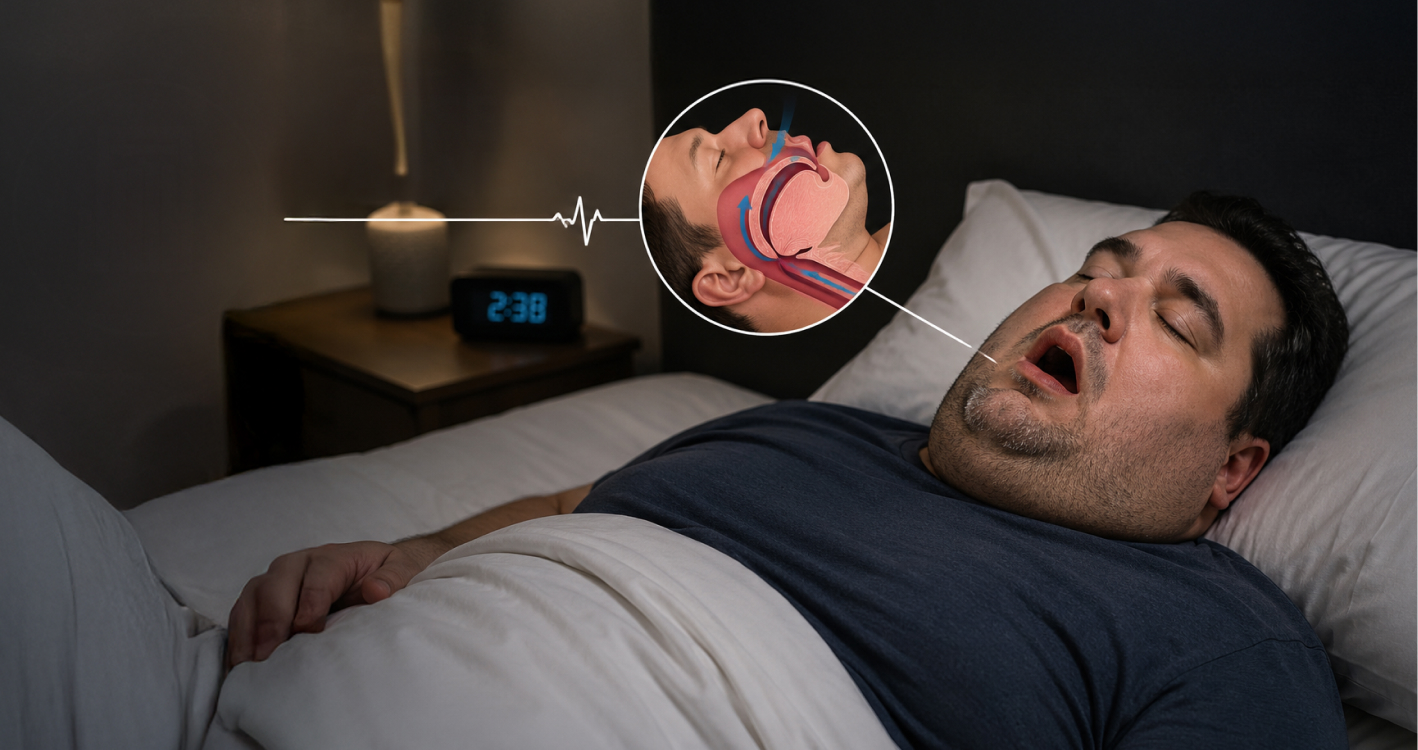
Why Bariatric Surgery Can Be a Breakthrough for Sleep Apnea
Sleep apnea is a sleep disorder that causes repeated pauses in breathing during sleep. There are three main types of sleep apnea, each with different causes and treatment approaches:
| Type of Sleep Apnea | Description | Can Bariatric Surgery Help? |
| Obstructive Sleep Apnea (OSA) | The most common type is caused by repeated blockage of the upper airway during sleep. It is strongly associated with obesity. | Yes. Weight loss after bariatric surgery can reduce airway obstruction, improve breathing during sleep, and decrease the severity of OSA symptoms. |
| Central Sleep Apnea (CSA) | Occurs when the brain does not send the correct signals to the muscles responsible for breathing. It is typically linked to neurological or cardiovascular conditions rather than obesity. | Limited. Bariatric surgery does not treat the underlying neurological cause of CSA. |
| Complex Sleep Apnea Syndrome | A combination of obstructive and central sleep apnea, where both airway obstruction and impaired brain signaling contribute to breathing interruptions. | Partially. Bariatric surgery may improve the obstructive component, but it does not address the central component. |
Among these, OSA is the type most closely linked to obesity and the one most likely to improve with significant weight loss.
For individuals with OSA, excess weight can narrow the upper airway, leading to repeated breathing interruptions during sleep. While Continuous Positive Airway Pressure (CPAP) therapy and lifestyle changes help manage symptoms, achieving lasting weight loss through diet and exercise alone can be challenging. When obesity is a contributing factor, bariatric surgery can address the underlying cause by promoting significant, long-term weight loss.
Weight loss after bariatric surgery can reduce airway obstruction, improve sleep quality, decrease the severity of sleep apnea, and, in some cases, reduce dependence on CPAP therapy. It may also lower the risk of obesity-related conditions such as type 2 diabetes, high blood pressure, and heart disease.
Although bariatric surgery is not a standalone treatment for sleep apnea, it can be an effective option for people with obesity and OSA who have not achieved lasting results with lifestyle changes alone. Combined with healthy habits and ongoing medical follow-up, it supports long-term weight management, better sleep, and improved overall health.
Ready to Improve Your Sleep and Health?
At NObesity, we help individuals with obesity and sleep apnea achieve better sleep and long-term health. Since excess weight is a major contributor to OSA, sustainable weight loss can significantly reduce symptoms and improve overall well-being.
Our experienced bariatric team creates personalized treatment plans focused on lasting weight loss and improved sleep health. For many patients, successful weight management can reduce the severity of OSA and may lessen dependence on CPAP therapy.
Don’t let poor sleep affect your quality of life. Take the first step toward better health today.
Call Us: +91-8999949999
Email: info@nobesity.in
Schedule your consultation today and begin your journey to better sleep, better health, and a healthier future.
FAQs
Can bariatric surgery help treat sleep apnea?
Yes. Bariatric surgery can help improve obstructive sleep apnea (OSA) by promoting significant, long-term weight loss. Reducing excess weight can decrease airway obstruction, improve breathing during sleep, and reduce the severity of sleep apnea symptoms.
Which type of sleep apnea can bariatric surgery improve?
Bariatric surgery is most beneficial for OSA, which is closely linked to obesity. It does not directly treat central sleep apnea (CSA), as that condition is caused by problems with the brain's control of breathing.
Who is eligible for bariatric surgery for sleep apnea?
You may be eligible for bariatric surgery if you have obesity and OSA and have not achieved lasting weight loss through diet, exercise, or other non-surgical treatments. Dr. Manish Khaitan will assess your BMI, medical history, and overall health to determine whether surgery is the right option for you. You can also check your BMI using our free BMI Calculator.
Will I still need to use a CPAP machine after bariatric surgery?
Some patients experience significant improvement in sleep apnea symptoms after losing weight and may require lower CPAP settings or, in some cases, no longer need CPAP therapy. However, you should only stop using CPAP after consulting your sleep specialist and completing the recommended evaluations.
How long does it take to see improvements in sleep apnea after bariatric surgery?
Many patients notice improvements within the first month as they begin losing weight. The degree and timing of improvement vary depending on the severity of sleep apnea and individual weight-loss progress.
Is bariatric surgery a permanent cure for sleep apnea?
Bariatric surgery can significantly reduce the severity of obstructive sleep apnea, but it is not guaranteed to cure the condition. Maintaining a healthy weight and attending regular follow-up appointments are essential for long-term success.
What are the benefits of bariatric surgery beyond improving sleep apnea?
In addition to improving sleep quality, bariatric surgery can help reduce the risk of obesity-related conditions such as type 2 diabetes, high blood pressure, heart disease, fatty liver disease, and joint problems. It can also improve energy levels and overall quality of life.